Leading European Universities for Gambling and Decision Science Research
When our team delves into the complex world of gambling behaviour, we often turn to the academic powerhouses across Europe pioneering this critical research. The continent stands at the forefront of understanding the psychological, economic, and neuroscientific forces that shape decisions at the casino table and beyond. This landscape is defined by a unique synergy of robust public health frameworks, substantial EU research funding, and world-class interdisciplinary scholarship, all converging to address the societal challenges of gambling-related harm.
Why European Academia Leads in Gambling Behaviour Research
Europe provides a distinctive ecosystem for gambling behaviour studies, one that balances deep theoretical inquiry with a strong mandate for public welfare. Unlike regions where research may be siloed or privately funded, the European approach often integrates diverse perspectives, from clinical psychology to econometric modelling, under the auspices of transparent, publicly accountable institutions. This creates a fertile ground for research that is both academically rigorous and directly applicable to policy and harm reduction.
The Role of EU Public Health and Funding
The European Union’s commitment to public health and evidence-based policy provides a crucial backbone for research. Programmes like Horizon 2020 and its successor, Horizon Europe, explicitly fund projects that tackle societal challenges. A prime example is the ‘EvidENT’ Horizon 2020 project, which directly supports interdisciplinary behavioural research on risky decision-making, investigating behavioural spillovers into domains like gambling. This level of targeted, cross-border funding enables large-scale, longitudinal studies that would be difficult to execute elsewhere, fostering a collaborative research environment across member states.
Interdisciplinary Approaches: Economics Meets Psychology
The European strength lies in its dismantling of academic barriers. Behavioural economics, a field born from this very fusion, is central to modern gambling research. It moves beyond the model of the purely rational actor, instead applying psychological realism to economic choices. In labs across Europe, economists work alongside cognitive scientists, neuroscientists, and public health researchers to deconstruct the decision-making process under uncertainty, providing a holistic view of gambling behaviour that informs everything from game design to consumer protection law.
UK Powerhouses: Behavioural Science and Gambling Harm
The United Kingdom is home to several globally influential institutions driving the field forward. British academia has a long tradition in both experimental psychology and economics, making it a natural leader in behavioural science applied to gambling. The research produced here is not confined to journals; it actively shapes the national conversation on gambling harm and regulatory practice.
University of Cambridge: Decision and Reasoning
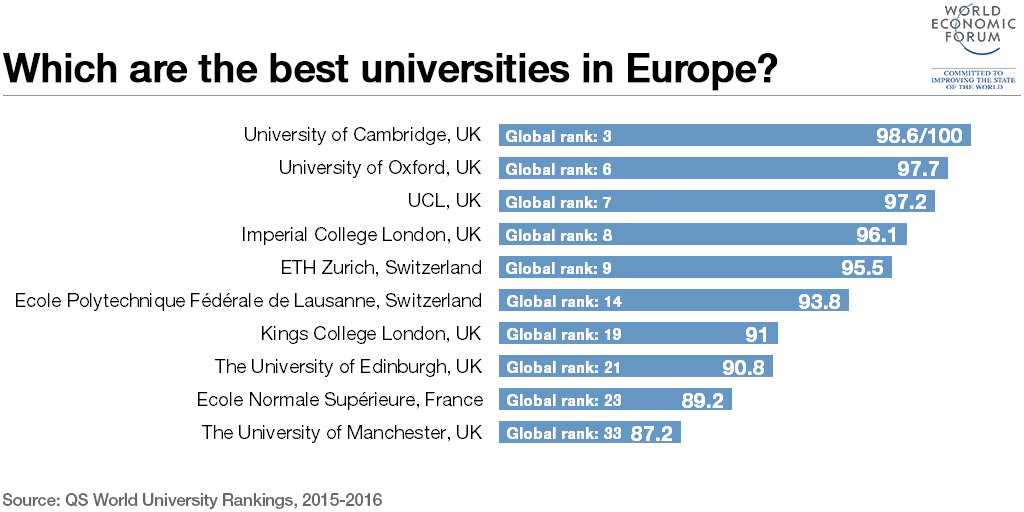
The University of Cambridge’s Department of Psychology hosts world-leading research on impulsivity and decision-making under risk. Its scholars investigate the cognitive underpinnings of choice, exploring how factors like time discounting, cognitive biases, and emotional states can lead to suboptimal or harmful decisions. This fundamental research into the mechanics of the human mind provides the essential building blocks for understanding problem gambling, identifying the vulnerabilities that certain products or environments may exploit.
University of Warwick: Experimental Economics & Policy
The University of Warwick’s Behavioural Science group is renowned for its experimental economics work on markets and incentives. Using controlled laboratory and field experiments, researchers at Warwick test how different informational frameworks, pricing structures, and regulatory nudges influence behaviour in gambling-like contexts. Their work provides empirical evidence on what policy levers can effectively promote safer gambling, making their findings invaluable for regulators. Notably, the UK Gambling Commission frequently commissions and utilises academic research from British universities, including Warwick, to inform its evidence-based policy approach.
Continental Europe’s Key Research Centres
Beyond the UK, Continental Europe boasts specialised centres of excellence that offer complementary perspectives, from detailed experimental economics to cutting-edge neurobiology.
The Netherlands: CREED and Experimental Labs
The University of Amsterdam’s Centre for Research in Experimental Economics and Political Decision-making (CREED) is a central hub in Europe for controlled experiments on economic and gambling-related decisions. CREED’s state-of-the-art laboratories allow researchers to meticulously test theories of risk perception, loss aversion, and strategic interaction in high-stakes scenarios. This experimental precision helps isolate the causal mechanisms behind gambling choices, free from the noise of real-world environments, yielding insights that are both pure and powerfully applicable.
Switzerland: Zurich’s Neuroeconomic Insights
The University of Zurich’s Department of Economics is famous for pioneering work in neuroeconomics—the study of the brain’s role in economic decision-making. By using tools like fMRI and psychophysiology, researchers here explore the biological basis of risk-taking and reward processing. This work helps answer fundamental questions: What happens in the brain of a problem gambler versus a recreational one? How do neurotransmitter systems respond to near-misses? The answers from Zurich provide a biological layer to the psychological and economic models developed elsewhere.
Nordic Focus on Problem Gamb.ling and Policy
Scandinavian nations, with their strong welfare-state traditions, have cultivated a research culture intensely focused on public health and population-level harm. The Nordic model treats gambling primarily as a health issue, and its academic institutions reflect this priority.
Finland: Public Health and Harm Prevention
At the University of Helsinki, research on gambling harms is deeply embedded within public health and social medicine. Finnish studies often employ large national registries and epidemiological methods to track the prevalence of problem gambling and its comorbidities, such as depression and substance abuse. This population-level lens is critical for assessing the true social cost of gambling and evaluating the effectiveness of national harm-prevention strategies, like mandatory spending limits and self-exclusion systems.
Sweden: Evidence-Based Regulation Studies
Swedish research has been instrumental in shaping the country’s evidence-based regulatory model. Academics conduct longitudinal studies monitoring consumer behaviour before and after regulatory changes, such as the re-regulation of the online market. This creates a feedback loop where policy is informed by data, and the effects of policy are then rigorously studied. Swedish research heavily influences the debate on topics like marketing restrictions, the role of state-owned monopolies versus licensed operators, and the design of responsible gambling tools.
Specialised Programmes and Industry Ties
The growth of this field is further cemented by dedicated educational programmes and tangible pathways from academic discovery to real-world application.
Postgraduate Degrees Shaping the Field
A new generation of researchers and policy analysts is being trained through specialised MSc programmes. For instance, the University of East Anglia offers a highly regarded MSc in Behavioural Economics, while other universities provide degrees in Behavioural Science, Cognitive Psychology, and Public Health with gambling-related modules. These programmes equip students with the toolkit to enter the field, be it in academia, regulation, or commercial roles focused on consumer protection.
Core modules in such degrees typically cover:
- Theoretical foundations of judgement and decision-making
- Experimental design and econometric analysis
- The psychology of addiction and behavioural change
- Neuroeconomics and the biology of choice
- Policy evaluation and behavioural insights for regulation
From Lab to Regulator: Impact on>Policy
The ultimate test of this research is its impact. The bridge from university lab to regulatory agency is increasingly well-travelled. As noted, the UK Gambling Commission has a formal practice of embedding academic evidence into its licensing conditions and consumer advice. Similarly, regulators in Sweden, the Netherlands, and Spain actively engage with national researchers. This ensures that policies on everything from game characteristics (like spin speeds and bonus structures) to affordability checks and advertising standards are grounded in solid behavioural science, moving beyond intuition to implement measures proven to mitigate harm.
We believe the future of safer gambling environments in Europe hinges on the continued, rigorous work from these academic institutions, blending deep theory with real-world impact. The collaborative, interdisciplinary, and publicly engaged model championed by Europe’s leading universities remains our best hope for understanding and addressing the complex challenges posed by gambling in the digital age.