
Decision-Making at the Poker Table: Insights from EU University Studies
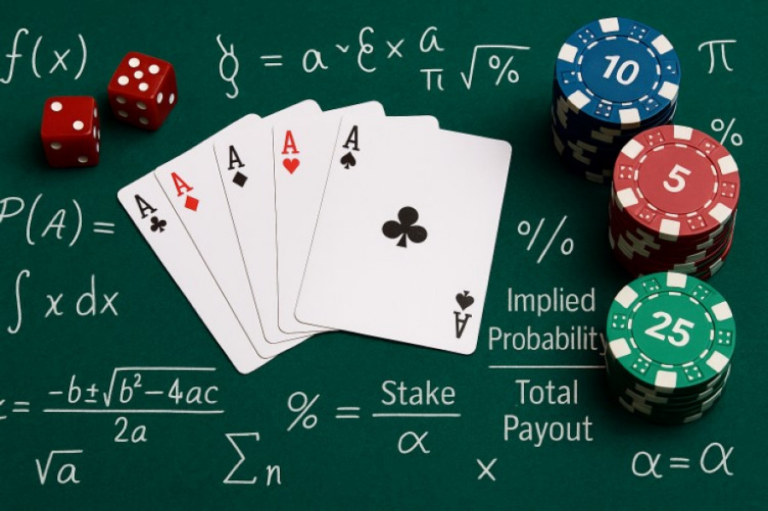
From the felt of a poker table to the labs of European universities, researchers are using behavioural economics to dissect the split-second choices that define a game. Poker is more than a pastime; it’s a microcosm of high-stakes decision-making under pressure, mirroring financial and strategic choices made in business and life. By analysing the behaviours of poker players, EU-funded scientists and academics are uncovering universal truths about risk, rationality, and human error. This research is not only refining our understanding of the game but is also becoming a cornerstone for promoting safer gambling environments across Europe.
Why Poker is a Perfect Lab for Behavioural Science
Unlike pure games of chance like roulette, poker is a complex blend of skill, psychology, and statistical probability. This unique combination makes it an exceptionally rich environment for behavioural economists. Researchers can observe how individuals process incomplete information, manage risk over time, and interact strategically with others—all within a controlled, rule-based setting. Studies, such as those from the University of Cambridge on risk perception and gambling, leverage this environment to understand how the ‘illusion of control’ can influence decisions even when chance plays a dominant role.
The Elements of Skill vs. Chance
The eternal debate in poker pits skill against luck. While the deal of the cards is random, every subsequent action—betting, folding, bluffing—is a deliberate choice influenced by skill. This interplay allows researchers to isolate how players attribute outcomes. A player on a winning streak may overestimate their skill (a form of outcome bias), while a losing player might blame ‘cold decks’, ignoring their own strategic errors. This distinction is crucial for both understanding player behaviour and for legal and regulatory classifications of the game.
Studying Uncertainty and Incomplete Information
Poker is a game of hidden information. You cannot see your opponents’ cards, and you must infer their strength from bets, timing, and physical tells. This scenario perfectly models real-world decisions in finance or business, where full information is never available. Behavioural labs use poker simulations to study how people update their beliefs with new data, how they use heuristics (mental shortcuts) under time pressure, and why they often fail to accurately calculate Bayesian probabilities in dynamic situations.
Key Cognitive Biases Uncovered at the Table
The pressured environment of a poker game acts as a catalyst for cognitive biases—systematic errors in thinking that deviate from rational judgement. Work from institutions like the London School of Economics (LSE) has meticulously documented how these biases play out in gambling contexts, providing a clear framework for understanding player pitfalls.
The Sunk Cost Fallacy and ‘Chasing’
Commonly known as ‘chasing losses’, this is the sunk cost fallacy in action. A player invests money into a pot and, even when the odds turn sharply against them, feels compelled to call further bets because they’ve “already put so much in.” They irrationally base their decision on irrecoverable costs rather than the current expected value of the hand. This bias is a direct pathway to significant financial loss and is a major focus of problem gambling research in Europe.
Emotional Decision-Making and ‘Going on Tilt’
‘Tilt’ is poker parlance for a state of emotional frustration that leads to reckless play. From a behavioural economics perspective, it represents a catastrophic breakdown of rational decision-making, often triggered by a bad beat (an unlucky loss) or perceived injustice. A player on tilt abandons strategy, makes larger bets, and plays hands they normally wouldn’t. This shift from the prefrontal cortex (responsible for logic) to the amygdala (the emotional centre) is a live demonstration of how emotion can override reason, a phenomenon studied in behavioural finance and consumer choice.
Horizon 2020: Funding a New Understanding of Gambling
The EU’s Horizon 2020 programme has been instrumental in advancing a scientific, evidence-based understanding of gambling behaviour across Europe. By funding large-scale, collaborative research projects, it has bridged the gap between academic theory and the realities of the gambling environment. These initiatives move beyond individual psychology to examine the systemic and technological factors that influence behaviour.
From Project Grants to Practical Insights
Projects like ‘REFORM’ (Reducing the Economic and Social Costs of Gambling Related Harm), funded under Horizon 2020, have been pivotal. REFORM investigated the behavioural roots of gambling, analysing how game characteristics and marketing interact with cognitive biases to influence player behaviour. Similarly, projects like ‘GREAT’ have explored gambling behaviours across Europe, providing comparative data that informs both national and EU-level policy discussions.
Linking Lab Findings to Player Protection
The ultimate goal of this publicly-funded research is translation into harm reduction. Insights from these Horizon 2020 behaviour studies are directly applicable to:
- Designing safer gambling products with built-in “cooling off” prompts.
- Training staff in casinos and online platforms to recognise signs of problematic decision-making like chasing losses.
- Informing the UK Gambling Commission’s evidence-based approach to regulation, ensuring policies are grounded in behavioural science rather than anecdote.
What Professional Players Know (That Researchers Confirm)
The wisdom long held by successful professional poker players is increasingly being validated by academic research. What was once considered intuitive craft is now explained by principles of behavioural economics and probability theory.
Bankroll Management as Applied Risk Theory
Professionals treat their poker funds as ‘risk capital’—money they can afford to lose without impacting their livelihood. This is a practical application of the economic concept of risk aversion and utility. Strict bankroll management rules (e.g., never risking more than 5% of your roll on a single game) are designed to survive the inevitable variance and negative swings dictated by chance, preventing ruin from a string of losses. UK-based training sites like PokerStrategy.com fundamentally teach this as the first rule of sustainable play.
The Maths Behind the Bluff: Probability in Action
While Hollywood portrays bluffing as pure psychology, at its core, it’s a mathematical exercise. Professionals calculate ‘pot odds’ (the ratio of the current pot size to the cost of a call) and estimate their ‘equity’ (the chance their hand will win) to make mathematically sound decisions. A successful bluff isn’t about staring someone down; it’s about representing a range of hands that, based on the betting sequence, is statistically likely and making it unprofitable for your opponent to call. This disciplined, probabilistic thinking is the antithesis of the emotional, biased decision-making that researchers warn against.
Implications for Problem Gambling Research in Europe
Understanding the mechanics of ‘normal’ or strategic decision-making at the tables is the essential baseline for identifying when and how that process becomes dysfunctional. EU research is mapping the journey from cognitive bias to harmful behaviour, which is vital for early intervention and effective support.
From Bias to Behaviour: Identifying Risk Pathways
Research shows that problem gambling is rarely about the money alone. It is often fuelled by the escape, the arousal, or the misapplied desire to solve financial problems. Cognitive biases like the illusion of control (“I can beat the odds”) or the gambler’s fallacy (“a win is due after losses”) create distorted thinking patterns. By identifying which biases a player is most susceptible to, interventions can be tailored. Charities like GamCare, a leading UK problem gambling support charity, use insights from this research to inform their helpline training and therapeutic approaches, helping individuals recognise and correct these distorted thought patterns.
European Policy and Player Protection Frameworks
The findings from EU university studies and Horizon 2020 projects are actively shaping a new generation of player protection frameworks. The UK Gambling Commission’s evidence-based approach to regulation, for instance, now mandates operators to use data to identify markers of harm—such as rapid, repeated deposits after a loss (chasing)—which are direct applications of behavioural research. Across Europe, there is a growing push for ‘behaviourally informed’ regulation that designs safer gambling environments by default, such as mandatory loss limits and stripped-back game designs that reduce cognitive overload and deceptive features.
The insights gleaned from EU research into the poker table and beyond are proving to be dual-purpose. They equip players with the knowledge to make more rational, less biased decisions, elevating the skill element of the game. More importantly, they provide regulators, clinicians, and support services with the essential tools to build a safer, more informed, and ethically responsible gambling environment across Europe. By treating the gambling context as a behavioural lab, we gain the knowledge not just to play better, but to protect more effectively.