
How Horizon Europe Funds Research Into Gambling Behaviour
From our work on the Evident project, we’ve seen first-hand how EU research frameworks are quietly reshaping our understanding of risk at the casino table. While the public may associate Horizon funding with clean energy or medical breakthroughs, a significant stream of investment is dedicated to unravelling the complexities of human decision-making. This includes direct, rigorous study of gambling environments, from the psychology of slot machine design to the cognitive biases exploited at the roulette wheel. This article explores how the European Union’s flagship research programmes, Horizon 2020 and its successor Horizon Europe, are driving a scientific revolution in behavioural economics that is fundamentally altering how we comprehend, regulate, and mitigate gambling harm across the continent, with the UK playing a central role.
The Evolution from Horizon 2020 to Horizon Europe
The transition from Horizon 2020 (2014-2020) to Horizon Europe (2021-2027) represents more than a simple renewal; it’s a strategic evolution with profound implications for behavioural research. Horizon Europe continues and significantly expands the behavioural science streams pioneered under its predecessor, placing an even sharper focus on tackling pressing societal challenges. The methodologies honed in studying consumer energy choices or financial decisions under Horizon 2020 are directly applicable to the high-stakes environment of gambling, creating a rich legacy of tools and insights.
The ‘Evident’ Project Legacy
Our own ‘Evident’ project, funded under Horizon 2020, focused on visualising energy consumption to nudge more sustainable behaviours. The core principles—using data to make abstract consequences tangible, understanding heuristics, and testing interventions in real-world settings—are mirror images of the approaches needed to study gambling. Projects like Evident proved the value of interdisciplinary consortia and rigorous field trials, a model now being applied to understand the triggers of problematic gambling and design effective counter-nudges.
A Renewed Focus on Societal Challenges
Horizon Europe is structured around “missions” and clusters, with Cluster 1: “Health” and Cluster 2: “Culture, Creativity and Inclusive Society” being particularly relevant. Here, research on addiction, mental well-being, digital harms, and economic behaviour receives targeted funding. Gambling-related research fits squarely into this mandate, as it intersects public health, consumer protection, and social cohesion. The framework explicitly encourages proposals that address the behavioural drivers of health-harming activities, providing a direct channel for studying the full spectrum of gambling behaviour from casual to compulsive.
Key Gambling & Behavioural Economics Projects in the UK
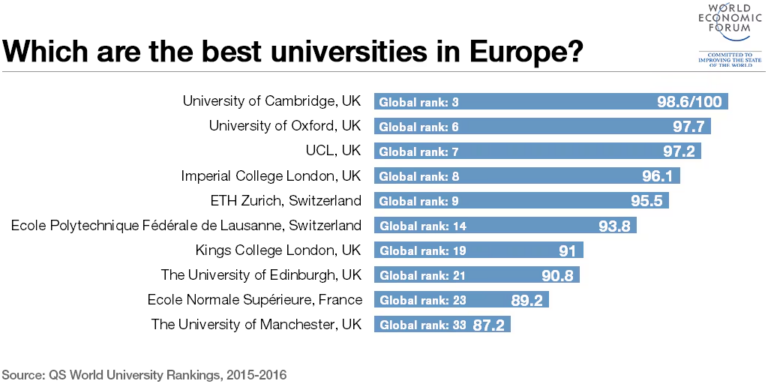
UK institutions have been, and remain, powerhouse participants in EU-funded behavioural research. Their expertise in experimental economics, psychology, and data science makes them indispensable partners in major consortia. London is a frequent host for Horizon Europe behavioural economics symposiums, underlining the city’s status as a global hub for this science. Specific projects highlight this deep involvement, translating EU investment into groundbreaking insights.
The ERICA Consortium
A prime example is the ‘ERICA’ project (European Research Initiative on Consumer Analysis for Gambling Behaviours). This consortium specifically studies gambling risks across Europe with UK involvement, bringing together academics, regulators, and treatment providers. ERICA aims to build a pan-European evidence base on the prevalence and patterns of problem gambling, examining how different regulatory environments and game characteristics influence harm. The participation of UK-based researchers ensures findings are directly relevant to the domestic context.
Insights from BOLD and DECISION
Projects like ‘BOLD’ (Bias and Openness in Learning and Decision-making) and various ‘DECISION’ initiatives, often involving the University of Cambridge’s Behavioural Insights team—a frequent Horizon Europe grant recipient—delve into the neurocognitive and psychological foundations of choice under risk and uncertainty. While not exclusively focused on gambling, their work on reinforcement learning, probability misjudgment, and impulsivity provides the fundamental science that explains why certain casino games are so captivating and potentially addictive. Their research often involves experiments that mirror gambling tasks to isolate key decision-making flaws.
Linking Casino Decision-Making to Broader Science
The controlled, incentive-driven environment of a casino is a potent laboratory for behavioural economists. Findings from the gambling floor don’t stay there; they feed into universal models of human risk perception and reward processing. This two-way street enriches both gambling-specific policy and our general understanding of economic behaviour.
The ‘Near-Miss’ Phenomenon
Research on slot machines has meticulously documented the ‘near-miss’ effect—where a loss that appears close to a win (e.g., two matching symbols with the third just off the payline) paradoxically increases motivation to continue playing. This effect, funded through behavioural science grants, has been shown to activate the same brain pathways as an actual win. Understanding this has implications beyond gaming machines, informing broader theories of persistence in the face of failure and the design of feedback systems in everything from mobile apps to financial trading platforms.
Cognitive Biases at the Table
Studies of blackjack or roulette players reveal a catalogue of cognitive biases in action:
- The Gambler’s Fallacy: The mistaken belief that past random events influence future outcomes (e.g., “red is due”).
- Illusion of Control: Believing one’s skill or ritual influences a chance-based game.
- Loss Chasing: The tendency to continue gambling to recover losses, often leading to greater deficits.
Quantifying these biases in the casino setting allows researchers to develop more accurate models of decision-making under risk, which are applicable in stock market investment, insurance purchasing, and entrepreneurial ventures.
Problem Gambling Research: A European Priority
Horizon Europe’s public health mandate has made problem gambling research a clear priority. Funding is directed not just at understanding the problem, but at developing, testing, and evaluating tangible solutions for harm prevention, treatment innovation, and evidence-based regulation.
Harm Prevention Frameworks
Research projects are designing and trialling proactive prevention frameworks. These include “smart” responsible gambling tools that use behavioural data to identify risk patterns, studies on the impact of advertising and sponsorship, and evaluations of stake and spin limits. This work often involves partnerships with charities on the frontline; for instance, GambleAware, a UK charity, partners in European research consortia, ensuring that scientific insights are grounded in practical experience and can be rapidly translated into public information campaigns.
Treatment and Policy Evaluation
EU funds support clinical trials for new therapeutic interventions, from cognitive behavioural therapy (CBT) adaptations to novel digital therapeutics. Crucially, there is also significant investment in policy evaluation science. Researchers analyse the real-world impact of regulatory changes—such as affordability checks, bans on credit card use, or changes to game characteristics—across different European jurisdictions. This provides regulators with comparative evidence on what works, moving policy beyond guesswork into the realm of evidence-based iteration.
Why This EU-Funded Research Matters for the UK
Despite Brexit, the UK’s deep integration into this European research ecosystem continues to be of paramount importance. The science produced directly informs national policy and clinical practice, and UK researchers remain key collaborators in securing and executing Horizon Europe grants.
Informing UK Regulation
The UK Gambling Commission uses insights from EU-funded behavioural research to shape its guidance and regulatory decisions. The evidence base on game design, marketing impact, and effective player protection measures, often generated through multi-country studies like ERICA, provides a robust foundation for the Commission’s work. This ensures UK regulation is informed by the latest international science, not just domestic data.
Cross-Border Collaboration Post-Brexit
UK universities and research institutes continue to be valued partners in Horizon Europe consortia. The complex challenges of gambling harm do not respect national borders; problem gambling is a transnational issue exacerbated by online platforms. Collaborative research allows the UK to benchmark its situation against European neighbours, learn from different regulatory experiments, and pool resources for large-scale studies that would be too costly for any single country. This sustained collaboration ensures the UK remains at the cutting edge of addiction science.
This sustained investment from Horizon 2020 to Horizon Europe ensures that our understanding of gambling behaviour is grounded not in anecdote, but in robust, cross-European science that can genuinely inform safer policies. By decoding the mechanics of decision-making at the casino table, this research illuminates universal truths about human psychology, while delivering the practical tools needed to protect public health and consumer welfare across the continent.